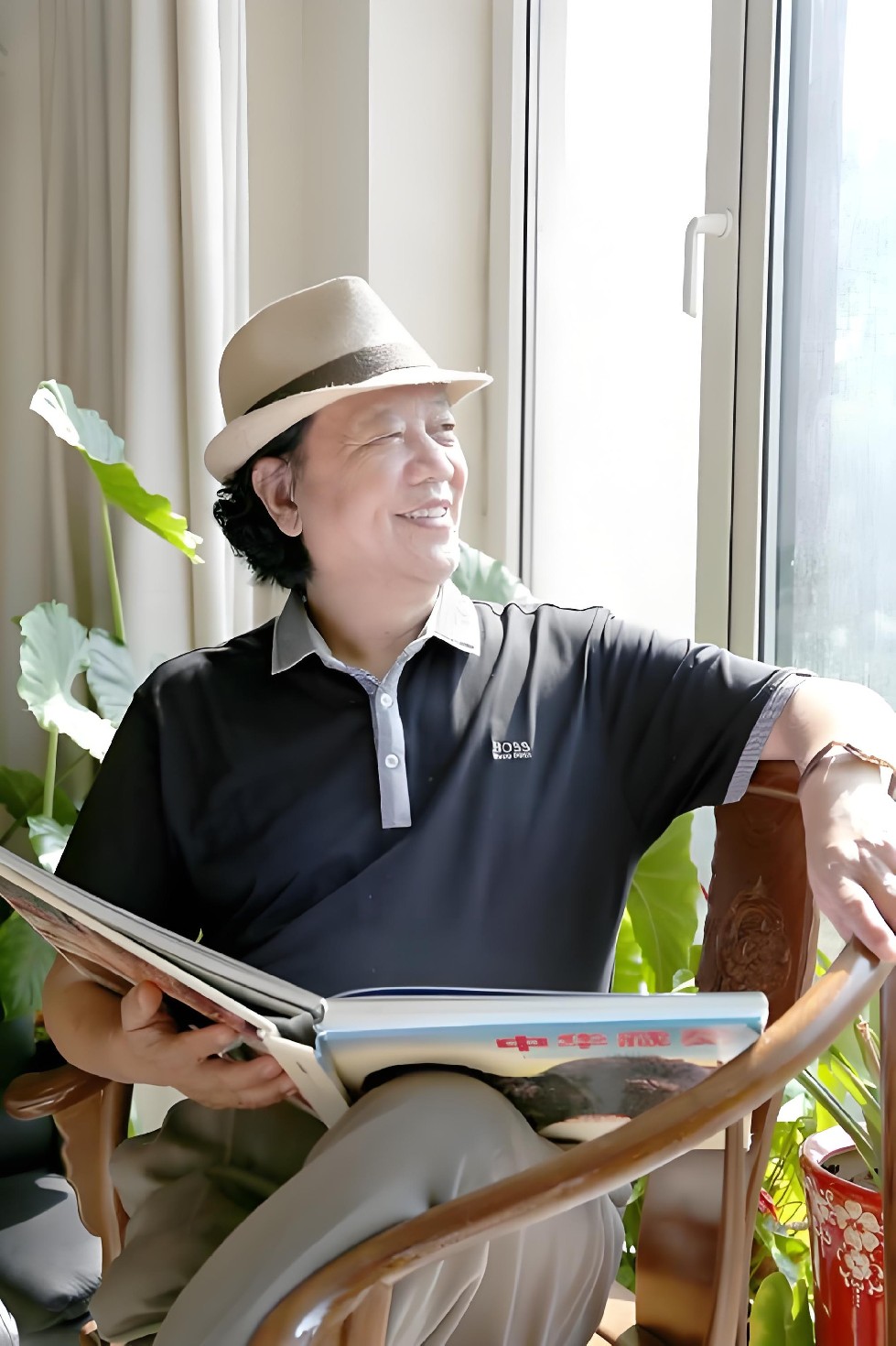
尼玛泽仁,藏族,四川巴塘人,毕业于四川美术学院。为第九届、十届、十一届、十二届全国政协委员,班禅画师,中央文史研究馆馆员,中国美术家协会会员,第六届中国美术家协会副主席,第七届、第八届中国美术家协会顾问,中国国家画院研究员、院委、顾问,中央文史研究馆书画院院委,中国画学会副会长,中国少数民族美术促进会会长,一级美术师,享受国务院特殊津贴专家。曾任四川省文史研究馆副馆长,曾被聘为2012年伦敦奥林匹克美术大会艺术指导委员会总顾问。2016年1月6日,获颁“2015中华文化人物”。2018年12月,当选中国美协第九届顾问。
曾在美国、英国、法国、瑞士、德国、西班牙、奥地利、卢森堡、意大利、比利时、澳大利亚、加拿大、印度、日本、韩国、墨西哥、及香港、澳门、台湾等多个国家和地区的博物馆、美术馆举办个人大型画展和联展,曾获国务院新闻办、外交部、文化部嘉奖以及四川省文联特别为他颁发的特殊荣誉证书。作品多次参加全国大展,如“百年中国画展”、“开放的时代”大型画展和第二届、第三届中国北京国际美术双年展以及“同一个世界——中国画家彩绘联合国大家庭”艺术大展,曾获全国性美术大展金奖、银奖。曾获美国巴特鲁治市政府授予的“荣誉市长”称号,英国利物浦市政府授予的“国际杰出艺术家”称号.获国务院授予的“全国民族团结、进步、模范”称号,中国美协等颁发的“民族杰出美术家”奖牌,四川省文联授予的“德艺双馨”艺术家。被认为是当前中国具有较大影响力和取得突出成就的画家之一。中央电视台《大家》栏目、《东方之子》《面对面》栏目、《发现之旅》、中央数字电视书画频道,国学频道等多种媒体拍摄有多部个人专题片,《中国文化人物》《人民日报》《光明日报》等多种报刊杂志均有个人专题介绍。其个人事迹录入多种人物传记和人才库。艺术历程尼玛泽仁先生致力于将一千三百年的藏传佛教绘画发展成现代艺术,是开一代新派的画家。他的新藏画作品曾多次参加国内外的重要美术展览,并多次获得大奖。其中:《元蕃瑞和图》《格萨尔王》(合作)、《牧马图》《有故事的土地》《自在天地》分别获得由文化部、中国美术家协会等颁发的全国画展金奖;《元蕃瑞和图》《有故事的土地》分别获得四川省文艺最高奖——巴蜀文艺金奖。作品《雪域》获四川省国画大展金龙奖。
尼玛泽仁先生1993年分别在美国波士顿、洛杉矶、华盛顿三大城市举办个人画展。1994年在英国伦敦、曼彻斯特、利物浦、康沃、乌斯特五大城市举办个人画展。1995年,在印度新德里现代美术馆、奥地利维也纳霍恩佛尔森宫、瑞士日内瓦联合国万国宫和瑞士苏黎世、西班牙马德里国家人类博物馆等国举办个人画展。1996年分别在香港中华文化城展览厅、美国亚特兰大罗斯威尔市市政府、中国美术馆举办个人画展。
1997年在法国巴黎皮尔卡丹美术馆举办个人画展。并在美国路易斯安娜州州立大学以”他山之石”为题进行学术展览。1999年分别在北京全国政协礼堂、美国路易斯安纳州州立大学博物馆举办个人画展,2013年在中央数字书画频道美术馆举办个人画展,同年在香港大会堂举办个人画展.2015年初参加奥地利中国书画新年音乐会中国画展,2015年7月,参加”视觉中国。洲际行”中意文化交流展曁佛罗伦萨国际艺术双年展中国展.并在日本、新加坡、台湾、阿尔及利亚参加过美术作品联展。2001年,作品《辉煌的遗迹》参加文化部、中国美术家协会、中国美术馆和中国画研究院主办的“百年中国画大展”。2003年,《极地的梦》等四幅作品参加中国美术馆建馆四十周年“开放的时代”大型画展。2004年,《天地间》参加澳门回归五周年书画大展。2005年,作品《最后的净土》参加北京第二届国际双年展。2007年,作品《共同的家园—阿尔卑斯山》参加“同一个世界_中国中国画家彩绘联合国大家庭艺术展”。2008年,作品《辉煌的遗迹》参加北京第三届国际双年展。同年,作品《珠峰圣火》,参展奥林匹克美术大会。2009年,作品《天路》等参加中国美术馆“灵感高原”画展。2010年,为上海世博会创作巨幅写意作品《黑白世界》,2012年,作品《雪域驰骋》参展伦敦奥林匹克美术大会。2015年,《空》等六幅作品参加全国文史翰墨精品展。同年,创作《中国远征军的回忆》参加抗战胜利70周年绘画展。
他在新藏画的创新和研究方面,取得举世瞩目的成就,被认为是对世界文化作出了杰出贡献的人物,美国国际人物传记中心把他选入《二十世纪最杰出贡献人物传》并授予金质奖章。1994年,英国利物浦市政府授予他“国际杰出艺术家”奖牌;1999年美国路易斯安娜洲巴鲁特治市政府授予他“荣誉市长”证书,并请他亲自将中华人民共和国国旗升在市政府门前,获得美国政府给予国际艺术家的最高殊荣。美国之音、英国BBC、中国中央电视台"大家"、“东方之子”、“与你同行”专栏、国家对外电视专题片专栏、中央数字电视书画频道美术大家、空中美术馆及访谈节目、山东时代美术专栏、以及《人民日报》《光明日报》《人民画报》《美术》等十多种国家级电视、报纸、杂志、广播电台均有专题报道。
入选《中国美术家辞典》、等十多种辞书,作品入选《中国美术全集》《中国工笔画》等大型画册。(作品《天驹》作为该画册的封面)出版有《十世班禅画师尼玛泽仁绘画选》《尼玛泽仁》《藏传佛教故事》《藏画新篇雪域赞歌》《大山无言》中国名画家精品集《尼玛泽仁》、中国当代工笔画名家作品《尼玛泽仁》《大美为真》中国国家画院研究员作品选尼玛泽仁等画册;《元蕃瑞和图》《雪域》等多幅作品为中国美术馆、民族文化宫、国外博物馆以及著名收藏家收藏。寻根传统尼玛泽仁经过多年的艰苦探索,根植于藏画传统,发展这一艺术并使之走向世界。他的代表作《元番瑞和图》《雪域》《有故事的土地》等体现了藏、汉族文化和西方现代艺术相融合的独特风格,充满了玄思妙想,涌动着庄严肃穆的宗教情怀,深刻地描绘出藏民族对世界的感知,,传达出藏族文化的内在精神。他的绘画是从藏民族文化的载体上生长出来的,“她的每一个形象,每一个符号都浸染着历史感”。
外界把尼玛泽仁新时期的画称为“新”唐卡。其实,尼玛泽仁认为唐卡是作为解读宗教存在的。过去作为宗教供奉品的唐卡大多以画佛像为主要内容,佛像的坐姿都是由历代高僧制定的,有其固定的模式规范,而新藏画则走出宗教殿堂,表现广泛的人民生活,新时代鲜活的文化精神。尼玛泽仁的画中保留了藏画色泽鲜明、造型夸张和超时空的特征,融汇了中国画的线条和西方艺术的立体造型手段,拉开了与传统唐卡画之间的距离。尼玛泽仁新形式的西藏题材的绘画征服了世界各地的观众和学者,荣誉和赞美接踵而至。《二十世纪最杰出贡献人物传》收录了他的事迹,英国利物浦市和美国巴特鲁治市政府在1994和1999年分别授予他“国际杰出艺术家”奖和“荣誉市长”证书。英国前BBC和中部电视台制片人安东尼·艾撒克先生说:“尼玛泽仁的画想象力丰富,结合了东西方的绘画技艺。欧洲用了整整五百年才把宗教绘画发展成新的艺术,而尼玛泽仁先生只用了短短几十年就完成了这一过程。”一位英国学者说:“尼玛泽仁先生的作品体现了宇宙感、历史感和文化感。难以想象有如此力度的作品,看了使人心灵受到震撼。尼玛泽仁的艺术不仅开拓了新的视觉空间,而且开拓出新的心灵空间,接通了宇宙自然和人在精神上的情感。”瑞士藏学家霍伊斯感叹道:“作为一名藏族艺术家,尼玛泽仁先生堪称奇才!我从未见过任何一位藏族艺术家能运用佛教传统和现代西藏这两个题材,创作出如此趣意盎然、富有生气的作品。”“赋予不可见的精神世界以生命形体和自然风格”。
自觉创新尼玛泽仁认为,各民族的母体文化是民族存在的根本,继承和发扬民族的传统文化是每个有责任感的文化人责无旁贷的历史使命,把藏族千年的绘画步入新时代,是他毕生努力的方向,他还认为学习先进民族的文化元素,滋润发展母体文化,是人类文化的发展规律,发展是对母体文化最大的保护。中国的中国画博大精深,是人类东方文化的高峰,它涵盖了中华民族的精、气、神,中国画要求作者以形写神,气韵贯通,在神韵中贯穿着作者的学识、修养、人品和追求。因此写意画必须写,而且写的是意不是形。这条路,对人物画家来讲,特别艰难。从美院出来的画家,素描功底都不错,如果凭借素描功夫去刻画,往往伤笔伤意,缺少韵味,难求灵气。如果顺手拈[2]来,又难免笔墨轻飘,潦草概念,一头扎进了传统笔墨情趣的专研中去,而后又把两者结合起来,翻来覆去炼笔炼意,久久为功,终于成就了放笔直取的能力。很好的把素描因素归纳成了笔墨,不同人物的个性,气质均在用笔的抑扬顿挫中完成,下笔不犹豫,浓淡干湿顺势而来,不刻意,不拘泥,从而获得通篇灵气的快感。笔下塑造的形象流畅而深沉,有个性,有内含,很有品味。形成中国绘画独特的审美,为丰富和发展人类文化作出贡献。
Nima Zeren, a Tibetan from Batang, Sichuan, graduated from the Sichuan Academy of Fine Arts. He served as a member of the 9th, 10th, 11th, and 12th National Committees of the Chinese People's Political Consultative Conference (CPPCC), was a painter for the Panchen Lama, a member of the Central Institute of Cultural History, a member of the China Artists Association, Vice Chairman of the 6th China Artists Association, advisor to the 7th and 8th China Artists Associations, researcher, committee member, and advisor at the China National Academy of Painting, committee member of the Calligraphy and Painting Institute of the Central Institute of Cultural History, vice president of the Chinese Painting Society, president of the China Ethnic Minority Art Promotion Association, a first-class artist, and an expert enjoying special allowances from the State Council. He previously served as Deputy Director of the Sichuan Provincial Institute of Cultural History and was appointed General Advisor to the Art Guidance Committee of the 2012 London Olympic Art Congress. On January 6, 2016, he was honored as a "2015 Chinese Cultural Figure." In December 2018, he was elected as an advisor to the 9th China Artists Association.
He has held numerous solo and group exhibitions in museums and art galleries across multiple countries and regions, including the United States, the United Kingdom, France, Switzerland, Germany, Spain, Austria, Luxembourg, Italy, Belgium, Australia, Canada, India, Japan, South Korea, Mexico, as well as Hong Kong, Macau, and Taiwan. He has received commendations from the State Council Information Office, the Ministry of Foreign Affairs, and the Ministry of Culture, along with a special honorary certificate issued by the Sichuan Provincial Federation of Literary and Art Circles. His works have been featured in several national exhibitions, such as the "Centennial Chinese Painting Exhibition," the large-scale exhibition "An Open Era," the second and third China Beijing International Fine Arts Biennials, and the art exhibition "One World – Chinese Artists Painting the United Nations Family," where he won gold and silver awards at these national exhibitions. He was awarded the title of "Honorary Mayor" by the Batlugh Municipal Government in the United States and the title of "International Outstanding Artist" by the Liverpool Municipal Government in the UK. He also received the title of "National Model of Ethnic Unity and Progress" from the State Council, the "Outstanding Ethnic Artist" medal from the China Artists Association, and the "Artistic Excellence and Moral Integrity" award from the Sichuan Provincial Federation of Literary and Art Circles. He is recognized as one of the most influential and accomplished painters in contemporary China. Multiple documentary films about him have been produced by various media outlets, including CCTV's programs "Everyone," "Children of the East," "Face to Face," "Discovery Journey," the Central Digital Television Calligraphy and Painting Channel, and the Traditional Chinese Studies Channel. Special profiles of him have appeared in publications such as "Chinese Cultural Figures," People's Daily, and Guangming Daily. His life story has been included in numerous biographies and talent databases. In his artistic journey, Mr.Nima Zeren has dedicated himself to transforming 1,300 years of Tibetan Buddhist painting into modern art, establishing himself as a pioneering artist of a new school. His innovative Tibetan-style paintings have been exhibited in numerous prestigious domestic and international art exhibitions, earning multiple awards. Notable works include *The Auspicious Harmony Between Yuan and Fan*, *King Gesar* (co-created), *The Horse Herding Scene*, *The Land with Stories*, and *Free and Easy in Heaven and Earth*, which received gold medals at national exhibitions awarded by the Ministry of Culture and the China Artists Association; *The Auspicious Harmony Between Yuan and Fan* and *The Land with Stories* were honored with the highest literary and artistic award in Sichuan Province—the Bashu Literary and Art Gold Award; while *The Snowy Region* won the Golden Dragon Award at the Sichuan Provincial Traditional Chinese Painting Exhibition.
Mr.Nima Zeren held solo exhibitions in 1993 in three major U.S. cities—Boston, Los Angeles, and Washington D.C.; in 1994 in five British cities including London, Manchester, Liverpool, Coventry, and Uster; in 1995 at venues such as the Modern Art Museum of New Delhi in India, the Hofburg Palace in Vienna, Austria, the United Nations Palace in Geneva, Switzerland, Zurich, Switzerland, and the National Museum of Humanities in Madrid, Spain; and in 1996 at the Hong Kong Chinese Cultural City Exhibition Hall, the Roswell City Government in Atlanta, USA, and the National Art Museum of China.
In 1997, he held a solo painting exhibition at the Pierre Cardin Museum in Paris, France, and an academic exhibition titled "Learning from Others" at Louisiana State University in the United States. In 1999, he held solo exhibitions at the National Committee of the Chinese People's Political Consultative Conference Hall in Beijing and the Louisiana State University Museum in the United States. In 2013, he held a solo exhibition at the Central Digital Calligraphy and Painting Channel Art Museum and another at the Hong Kong Great Hall of the People in the same year. Early in 2015, he participated in the Chinese painting exhibition at the Austrian Chinese Calligraphy and Painting New Year Concert. In July 2015, he took part in the Sino-Italian cultural exchange exhibition "Visual China: An Intercontinental Journey" and the "China" section of the Florence International Art Biennale. He also exhibited in joint art exhibitions in Japan, Singapore, Taiwan, and Algeria. In 2001, his work "Brilliant Ruins" was featured in the "Centennial Chinese Painting Exhibition" organized by the Ministry of Culture, the China Artists Association, the National Art Museum of China, and the Chinese Painting Research Institute. In 2003, four works including "Dreams of the Polar Regions" were displayed in the large-scale exhibition "An Open Era" marking the 40th anniversary of the National Art Museum of China. In 2004, "Between Heaven and Earth" was exhibited in the grand calligraphy and painting exhibition commemorating the fifth anniversary of Macau's return to China. In 2005, his work "The Last Pure Land" appeared at the Second Beijing International Biennale. In 2007, "A Shared Home—the Alps" was included in the "One World <China> China Painters' Colorful Art Exhibition for the United Nations Family." In 2008, "Brilliant Ruins" was featured in the Third Beijing International Biennale, while his work "The Sacred Flame of Mount Everest" participated in the Olympic Art Congress. In 2009, works such as "Heavenly Road" were showcased in the "Inspiration Plateau" exhibition at the National Art Museum of China. In 2010, he created the large-scale freehand painting "Black and White World" for the Shanghai World Expo. In 2012, his work "Racing Through the Snowy Land" was exhibited at the London Olympic Art Exhibition. In 2015, six works including "emptiness" participated in the National Fine Arts Exhibition of Literature, History and Calligraphy. The same year, he produced "Memories of the China Expeditionary Force" for the painting exhibition commemorating the 70th anniversary of the victory in the War of Resistance Against Japan.
He has achieved globally recognized accomplishments in the innovation and research of new Tibetan painting, earning recognition as a figure who made outstanding contributions to world culture. The International Biographical Center of the United States included him in its "Biographies of the Most Outstanding Figures of the 20th Century" and awarded him a gold medal. In 1994, the Liverpool City Council in the UK honored him with the "International Outstanding Artist" medal; in 1999, the Baruch City Government in Louisiana, USA, granted him an "Honorary Mayor" certificate and invited him personally to raise the flag of the People's Republic of China before the city hall—a distinction representing the highest honor bestowed upon international artists by the U.S. government. His work has been featured in over ten national media outlets including Voice of America, BBC, China Central Television's programs "Dajia," "Oriental Sons," and "Walking with You," special documentary series on international affairs, the Central Digital Television Art Channel's "Art Masters" section, online art galleries and interview programs, Shandong Times' art column, as well as publications such as People's Daily, Guangming Daily, People's Pictorial, and Fine Arts magazine.
His works have been included in more than ten dictionaries, such as the *China Artists Dictionary*, and selected for major art albums including the *Complete Collection of Chinese Art* and *Chinese Gongbi Painting*. (His work *Tianju* served as the cover of this album.) He has published several collections, including *Selected Paintings of Nima Tsering, the Ten-generation Panchen Lama's Artist*, *Nima Tsering*, *Stories of Tibetan Buddhism*, *New Chapters of Tibetan Painting: Ode to the Snowy Land*, *Silent Mountains*, the renowned Chinese painter's masterpiece collection *Nima Tsering*, contemporary masterpieces of Chinese gongbi painting *Nima Tsering* and *Great Beauty Is Truth*, and a selection of works by researchers at the China National Academy of Painting, among others. Several of his pieces, such as *The Auspicious Harmony Between Yuan and Fan* and *The Snowy Land*, are collected by the National Art Museum of China, the Palace of Ethnic Culture, foreign museums, and prominent collectors. Rooted in tradition, Nima Tsering has spent years exploring and developing Tibetan painting traditions, bringing this art form to the global stage. His representative works, including *The Auspicious Harmony Between Yuan and Fan*, *The Snowy Land*, and *A Land with Stories*, showcase a unique style that blends Tibetan and Han cultures with Western modern art, brimming with philosophical depth and a profound sense of religious solemnity. They vividly depict the Tibetan people's perception of the world and convey the intrinsic spirit of Tibetan culture. His paintings emerge from the very essence of Tibetan culture, where "every image and symbol is imbued with a sense of history."
The outside world refers to Nima Tsering's paintings from his new era as "new" thangkas. In fact, Nima Tsering believes that thangkas serve to interpret religious existence. In the past, most thangkas used as religious artifacts primarily depicted Buddhist images, whose postures were standardized by eminent monks throughout history, adhering to fixed patterns and norms. In contrast, new Tibetan paintings have moved beyond religious settings to portray diverse aspects of everyday life and the vibrant cultural spirit of the modern era. Nima Tsering's works retain the distinctive features of Tibetan painting—vivid colors, exaggerated forms, and transcendent temporal and spatial dimensions—while integrating the linear techniques of Chinese painting with the three-dimensional modeling methods of Western art, thereby distinguishing them from traditional thangkas. His innovative Xizang-themed paintings have captivated audiences and scholars worldwide, earning him numerous honors and accolades. His achievements were documented in *The Biographies of the Most Outstanding Figures of the Twentieth Century*, and he was awarded the "International Outstanding Artist" prize by Liverpool City Council in the UK and the "Honorary Mayor" certificate by Batlugh Town Council in the United States in 1994 and 1999, respectively. Anthony Isaac, former producer at the BBC and Channel Central, remarked: "Nima Tsering's paintings are rich in imagination, blending Eastern and Western artistic techniques. It took Europe a full five centuries to develop religious painting into a distinct art form, whereas Mr.Nima Tsering accomplished this in just a few decades." A British scholar noted: "Mr.Nima Tsering's works embody a profound sense of the universe, history, and culture. It is hard to imagine works with such power; viewing them leaves one profoundly moved. Nima Tsering's art not only opens up new visual dimensions but also creates new spiritual realms, bridging the emotional connection between the natural universe and human spirit." "The Swiss Tibetologist Hoys remarked with admiration: 'As a Tibetan artist, Mr.Nima Tsering is truly a genius! I have never seen any Tibetan artist combine the Buddhist tradition and modern Xizang themes to create works so vibrant and full of vitality.' He endowed the invisible spiritual world with a tangible form and a natural style."
Ziwen Nima Zeren believes that the maternal culture of each ethnic group is the foundation of its existence, and inheriting and promoting traditional ethnic culture is an inescapable historical mission for every responsible cultural individual. Advancing Tibetan painting, with its millennia of history, into a new era has been his lifelong endeavor. He also maintains that learning cultural elements from advanced ethnic groups to enrich and develop maternal culture aligns with the inherent laws of human cultural evolution, as development represents the greatest form of protection for such culture. China's traditional painting is profound and extensive, standing as the pinnacle of Eastern culture; it embodies the essence, vitality, and spirit of the Chinese nation. It demands that artists capture the spirit through form, achieving a seamless integration of energy and rhythm, where the artist's knowledge, cultivation, character, and aspirations permeate the work. Therefore, freehand brushwork must be practiced—but what should be captured is intent, not mere form. This path proves particularly challenging for figure painters. Those graduating from art academies typically possess strong drawing skills; however, relying solely on these skills often results in flawed brushwork and lack of depth, making it difficult to convey genuine artistic vitality. Conversely, relying indiscriminately on existing techniques may lead to superficial and haphazard execution. By immersing oneself in the study of traditional brushwork aesthetics and integrating both approaches through persistent practice, one eventually develops the ability to express ideas freely and directly. Drawing on sketching techniques to refine brushwork, the distinct personalities and temperaments of different figures are conveyed through rhythmic variations in stroke execution—without hesitation, with natural gradations of density and moisture—without pretense or rigidity, thereby achieving a sense of enduring artistic vitality throughout the composition. The images created thus exhibit fluidity, depth, individuality, richness, and refined taste, embodying the unique aesthetic of Chinese painting and contributing to the enrichment and advancement of human culture.(注:来自智能翻译)