展览预告 | 梵韵丹青——热贡娘本唐卡艺术展

2026-08-25 春燕 1.1万次 阅读

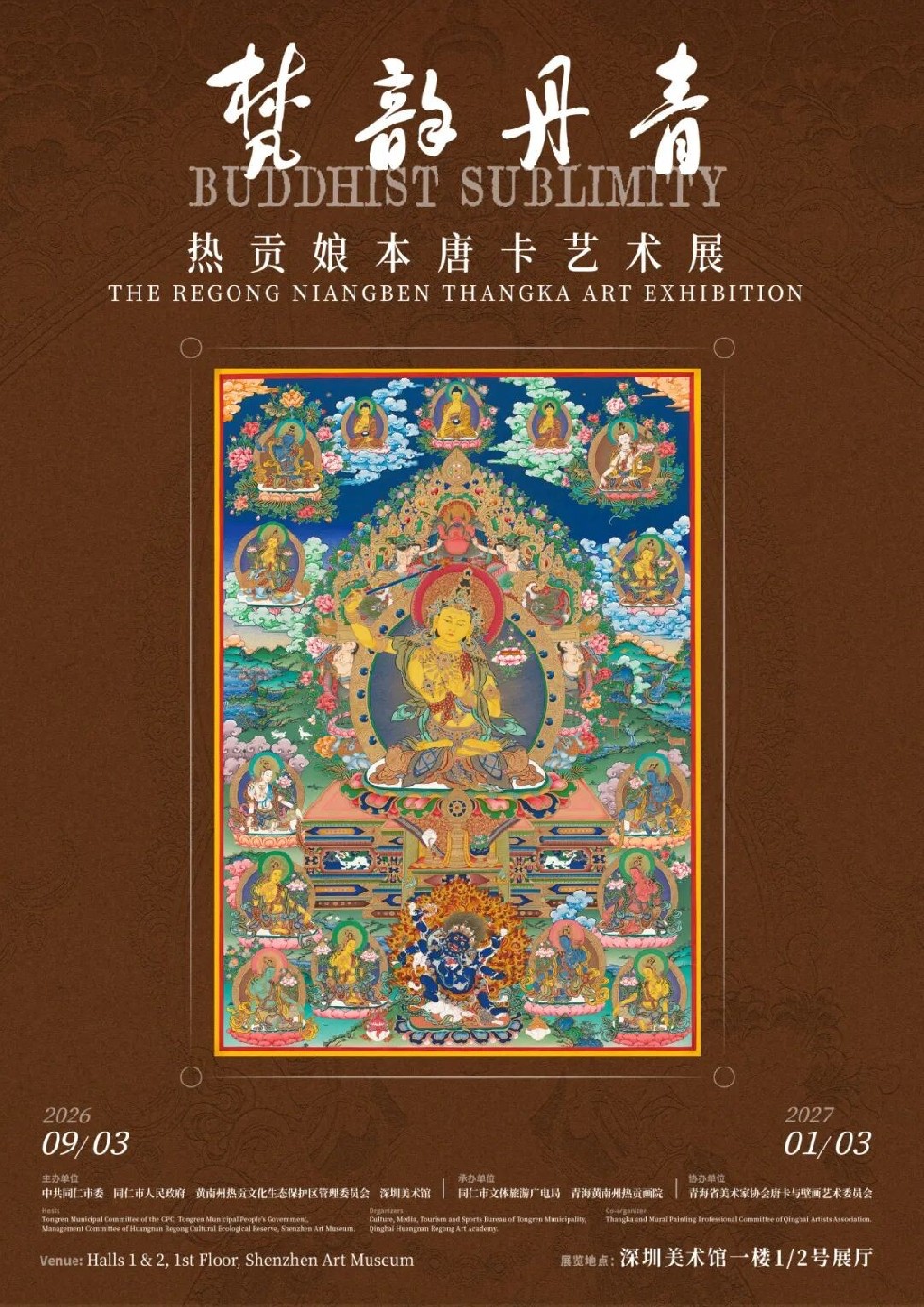
梵韵丹青——热贡娘本唐卡艺术展,将于2026年9月3日至2027年1月3日在深圳美术馆一层1、2号展厅展出。

1.jpg

梵韵丹青

热贡娘本唐卡艺术展

BUDDHIST SUBLIMITY

THE REGONG NIANGBEN THANGKA ART EXHIBITION


展览时间

2026年9月3日至2027年1月3日

Exhibition Dates

September 3, 2026 – January 3, 2027


展览地点

深圳美术馆一层1、2号展厅

Venue

 Halls 1 & 2, 1st Floor, Shenzhen Art Museum


主办单位

中共同仁市委

同仁市人民政府

黄南州热贡文化生态保护区管理委员会

深圳美术馆   

Hosts

Tongren Municipal Committee of the CPC,

Tongren Municipal People's Government,

Management Committee of Huangnan Regong Cultural Ecological Reserve, Shenzhen Art Museum


承办单位

同仁市文体旅游广电局

青海黄南州热贡画院

Organizers

Culture, Media, Tourism and Sports Bureau of Tongren Municipality, Qinghai Huangnan Regong Art Academy


协办单位

青海省美术家协会唐卡与壁画艺术委员会 

Co-organizer

Thangka and Mural Painting Professional Committee of Qinghai Artists Association

前言


唐卡系藏语音译,作为中华传统绘画中独具特色的艺术形式,自唐宋以来便承载着不同地域文明交流互鉴的功能,是连接青藏高原与中原、沟通中国与南亚及中亚的重要艺术载体。经过千百年的发展演变,唐卡逐渐形成了完善的艺术体系和独特的表现语言,以严谨的造型规范、精妙的线条运用、绚丽的色彩表现和丰富的图像系统,承载着历史记忆、哲学思想、审美理想与精神追求。其题材不仅涵盖宗教信仰,也涉及历史传记、天文历算、医药知识、建筑艺术、民俗风情等诸多领域,是中华多民族共同创造、传承和发展的重要文化遗产。2006年,“藏族唐卡”被列入《第一批国家级非物质文化遗产名录》。2009年,唐卡与堆绣、彩塑、铜雕等共同构成的“热贡艺术”被联合国教科文组织列入《人类非物质文化遗产代表作名录》。

热贡唐卡作为热贡地区重要的非物质文化遗产,与当地独特的自然生态和社会生态紧密相连,是伴随时代发展和社会变迁而不断演进的活态文化形态,具有可持续发展的文化生态结构。数百年来,当地的僧侣与画师广泛吸收多元地域文化艺术之精华,以精妙的线条和绚丽的色彩为中国美术的发展增添了璀璨篇章。

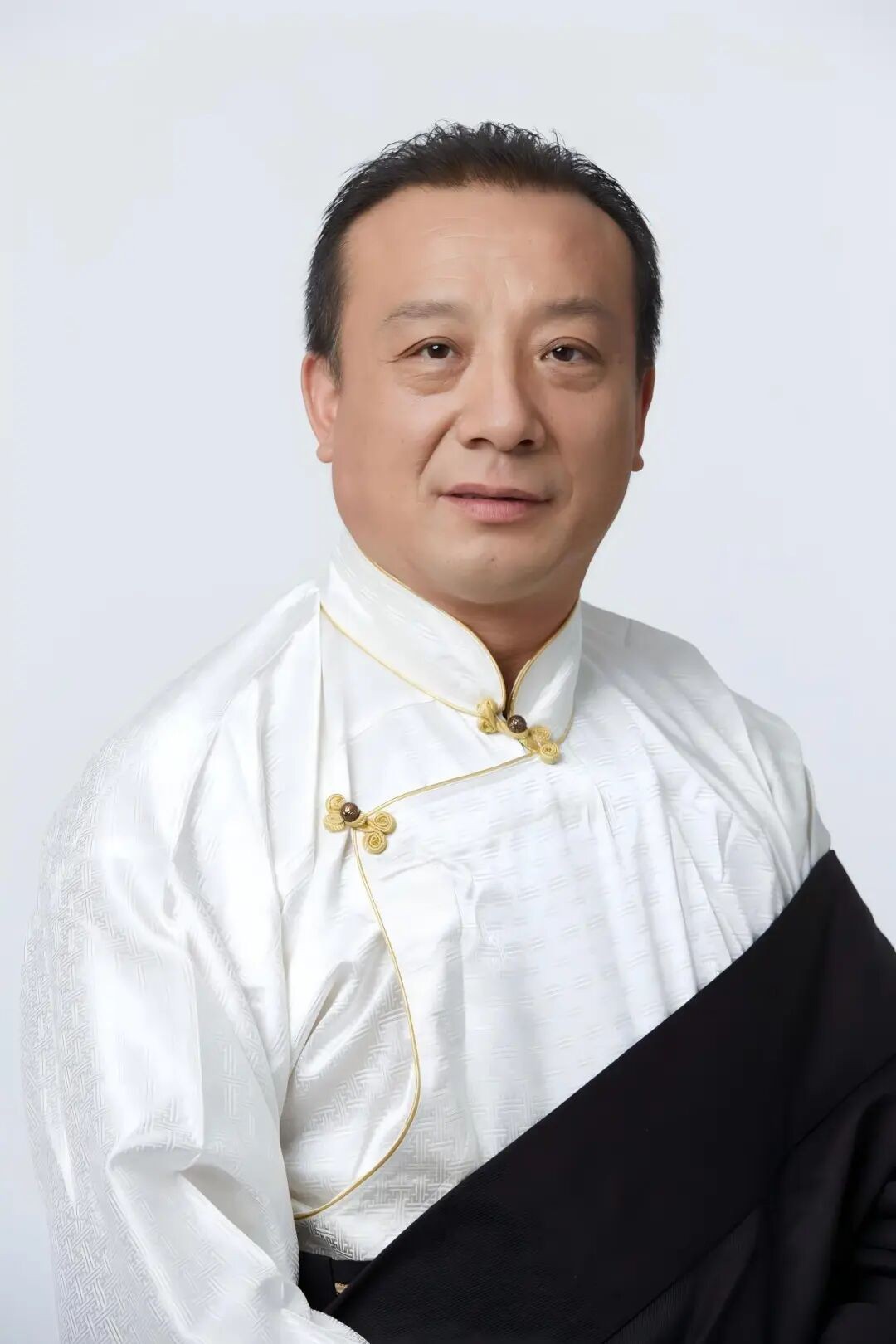
娘本先生是中国工艺美术大师、国家级非物质文化遗产项目“热贡艺术”代表性传承人,在继承热贡艺术传统风格的基础上,他不断探索、大胆创新,深入挖掘唐卡传统图像体系与色彩语言,综合运用热贡唐卡泥金技艺与汉族工笔画表现手法。其作品构图严谨、线条流畅、色彩绚丽、细节精微,人物形象生动传神,造型秀美和谐,既具有唐卡艺术的庄严气韵,又彰显独特的审美价值。

其艺术实践深植于黑唐、彩唐、红唐、金唐等传统技法体系,兼融当代审美意趣,使这一古老艺术形式焕发出新的生机。多年来,娘本先生积极推进热贡唐卡的研究、传承和传播,并秉持慈悲济世的人文情怀,开办画院、收养孤儿,在艺术探索与人生实践中践行传统文化的守护与发展。娘本先生的实践,展示了非物质文化传承人在当代社会中的创造活力,非遗传承不是简单复制传统,而是在尊重历史文脉、延续文化基因的基础上,回应时代需求,实现创造性转化与创新性发展。

本次展览汇集娘本先生多件代表性作品,呈现热贡唐卡丰富多样的艺术形制与经典图像,这些作品既体现了传统唐卡精工细绘的艺术精髓,也展现了融合时代的创新表达。唐卡作为全人类共享的文化遗产,从雪域高原来到南海之滨的深圳,这场跨越千里的文化对话,以非物质文化遗产为纽带,推动活态传承,赓续民族文化根脉,促进中华优秀传统文化的传播与交流,并向世界展示中华文明兼容并蓄、多元共生的精神内核。

愿每一位观者,都能在这一笔一画、一彩一金之间,感悟精神的力量、艺术的温度,以及热贡唐卡这一活态文化在时代流转中生生不息的永恒之美。


深圳美术馆馆长 朱建军博士

2026年8月

Preface


Thangka, a transliteration of its Tibetan name, is a distinctive form of traditional Chinese painting. Since the Tang and Song dynasties, it has served as a vital artistic medium through which civilizations across different regions have encountered, exchanged, and enriched one another, connecting the Tibetan Plateau with inland China and fostering cultural dialogue between China and South and Central Asia. With a history spanning centuries, Thangka has developed into a sophisticated artistic system and a unique visual language. Through its rigorous formal structures, refined use of line, vibrant color expressions, and rich iconographic traditions, Thangka embodies historical memory, philosophical ideas, aesthetic ideals, and spiritual aspirations. Its subjects extend far beyond religious beliefs. They encompass history, astronomy, calendrical studies, medicine, architecture, folk customs, and many other fields, making it an important cultural heritage created, inherited, and developed collectively by the diverse ethnic communities of China. In 2006, “Tibetan Thangka” was inscribed on the First Batch of National Intangible Cultural Heritage List. In 2009, Thangka, together with Regong Arts, including duixiu (embroidery appliqué), painted sculptures, and copper sculptures, was inscribed by UNESCO on the Representative List of the Intangible Cultural Heritage of Humanity.


As a vital intangible cultural heritage of the Regong region, Regong Thangka is closely intertwined with its unique natural and social ecosystems. It is a living cultural form that has continuously evolved with social changes over time, possessing a sustainable cultural-ecological structure. For centuries, local monks and painters have drawn extensively from diverse regional artistic traditions, enriching Chinese art with their exquisite lines and brilliant colors.


Mr. Niangben is a Master of Chinese Arts and Crafts and a National-level Representative Inheritor of the Intangible Cultural Heritage project “Regong Arts.” While remaining rooted in the traditional style of Regong art, he has persistently explored and boldly innovated, drawing upon the traditional iconographic systems and color palettes of Thangka and synthesizing the gold-ground painting techniques of Regong Thangka with the fine brushwork of Chinese gongbi painting. His works are characterized by rigorous composition, graceful lines, resplendent colors, and meticulous details, with figures that are vivid and expressive, graceful and harmonious. They embody both the solemn splendor of Thangka art and a distinctive aesthetic sensibility.


Rooted in the traditional techniques of Black Thangka, Colored Thangka, Red Thangka, and Gold Thangka, his artistic practice embraces contemporary aesthetic sensibilities, breathing new life into this ancient art form. Over the years, Niangben has actively advanced the research, transmission, and dissemination of Regong Thangka. Guided by a spirit of compassion and a commitment to benefiting society, he has established art academies and taken in orphans, embodying the preservation and development of traditional culture through both his artistic exploration and his life's work. His practice demonstrates the creative vitality of intangible cultural heritage inheritors in contemporary society. Heritage transmission, in his view, is not a simple replication of tradition but rather a creative transformation and innovative development that responds to the needs of the present while honoring the historical lineage and cultural DNA of the past.


This exhibition brings together a selection of Mr. Niangben’s representative works, presenting the diverse artistic forms and classic iconography of Regong Thangka. These pieces reflect both the refined essence of traditional Thangka craftsmanship and the innovative expressions shaped by contemporary aesthetics. As a shared cultural heritage of humanity, Thangka has traveled from the snowy plateau to Shenzhen, a coastal city on the South China Sea. Mediated by intangible cultural heritage, this cultural dialogue across thousands of kilometers fosters living transmission and sustains the roots of ethnic culture. It promotes the dissemination and exchange of China's outstanding traditional culture, and reveals to the world the inclusive and symbiotic spirit of Chinese civilization.


May every visitor, in every stroke of the brush and every glint of gold, perceive the power of the spirit and the warmth of art, and experience the enduring and ever-evolving beauty of Regong Thangka as a living tradition through the passage of time.


Dr. Zhu Jianjun

Director, Shenzhen Art Museum

August 2026

△▽

艺术家简介


2.jpg

娘本 

Niangben

1971年2月17日出生于青海省黄南藏族自治州同仁县隆务镇吾屯上庄。12岁跟随中国工艺美术大师夏吾才郎学艺,此后一直从事“热贡艺术”唐卡绘画和藏传佛教艺术的研究工作,是热贡唐卡最具代表性的人物之一。

现为青海黄南州热贡画院院长,政协第十三届青海省委员会委员、政协第十三届青海省委员会文化文史和学习委员会副主任、中国非物质文化遗产保护协会副会长、青海师范大学非遗研究院院长。

曾于2014年至2019年在中国国家博物馆、中国美术馆、上海中华艺术宫、北京恭王府博物馆和深圳关山月美术馆等国内多个重要艺术机构先后举办了个人唐卡艺术展览。远赴美国、法国、德国、日本、韩国等20余个国家,向世界展示热贡唐卡艺术的魅力,赢得了高度评价和赞誉。作品屡获国家级和省级大奖,被中国国家博物馆、中国艺术研究院、中国美术馆、中国工艺美术馆等全国各大博物馆和国务院办公厅、北京奥组委、澳门特别行政区政府等部门收藏。

娘本先生先后荣获多项荣誉称号:全国劳动模范、全国就业创业优秀个人、全国社会扶贫先进个人、第七届全国农村青年致富带头人标兵、全国轻工行业劳动模范,以及中国工艺美术大师、国家级非物质文化遗产项目热贡艺术代表性传承人等。

2006年8月,娘本创办青海黄南州热贡画院。画院致力于抢救、传承和弘扬国家级非物质文化遗产项目热贡艺术,先后被评定为“国家文化产业示范基地”“国家级非物质文化遗产生产性保护示范基地”“青年就业创业见习基地”。画院采用“画院+农户+基地”模式,长期免费招收贫困家庭子女和孤儿,提供食宿并传授唐卡技艺,累计培训学员2000余人。

Artist Biography


Niangben was born on February 17, 1971 in Wutun Shangzhuang, Longwu Town, Tongren County, Huangnan Tibetan Autonomous Prefecture, Qinghai Province. At the age of 12, he began his artistic training under Master Xiawucailang, a Master of Chinese Arts and Crafts. He has since devoted himself to Thangka painting within the “Regong Arts” tradition and to the study of Tibetan Buddhist art, becoming one of the most representative figures in Regong Thangka.


He currently serves as Dean of the Qinghai Huangnan Regong Art Academy, a member of the 13th Qinghai Provincial Committee of the Chinese People's Political Consultative Conference (CPPCC), Vice Chairman of the Committee on Culture, Historical Data and Studies of the 13th Qinghai Provincial Committee of the CPPCC, Vice President of the China Intangible Cultural Heritage Protection Association, and Dean of the Institute of Intangible Cultural Heritage at Qinghai Normal University.


From 2014 to 2019, he held solo Thangka exhibitions at multiple major art institutions across China, including the National Museum of China, the National Art Museum of China, the China Art Museum (Shanghai), the Prince Kung's Palace Museum in Beijing, and the Guan Shanyue Art Museum in Shenzhen. He has traveled to more than 20 countries, including the United States, France, Germany, Japan, and the Republic of Korea, to present the art of Regong Thangka to the world, earning international acclaim and high praise. His works have received numerous awards at the national and provincial levels and are held in major museum collections across China, including the National Museum of China, the Chinese National Academy of Arts, the National Art Museum of China, and the China National Arts and Crafts Museum, as well as in the collections of the General Office of the State Council, the Beijing Organizing Committee for the Olympic Games, and the Government of the Macao Special Administrative Region.


Niangben has received a number of honorary titles, including National Model Worker, National Outstanding Individual in Employment and Entrepreneurship, National Advanced Individual in Poverty Alleviation, the Seventh National Model Leader of Rural Youth in Poverty Alleviation and Development, National Model Worker of the Light Industry Sector, as well as Master of Chinese Arts and Crafts and National-level Representative Inheritor of the Intangible Cultural Heritage project “Regong Arts.”


In August 2006, Niangben founded the Qinghai Huangnan Regong Art Academy. The Academy is dedicated to the preservation, transmission, and revitalization of the national-level intangible cultural heritage project “Regong Arts.” It has been designated as a National Cultural Industry Demonstration Base, a National-level Demonstration Base for the Productive Protection of Intangible Cultural Heritage, and a Youth Employment and Entrepreneurship Internship Base. Operating under an “Academy + Households + Base” model, the Academy has long provided free room and board and Thangka training to children from impoverished families and orphans, training over 2,000 apprentices to date.

△▽

部分展出作品

Selected Exhibited Works

3.jpg

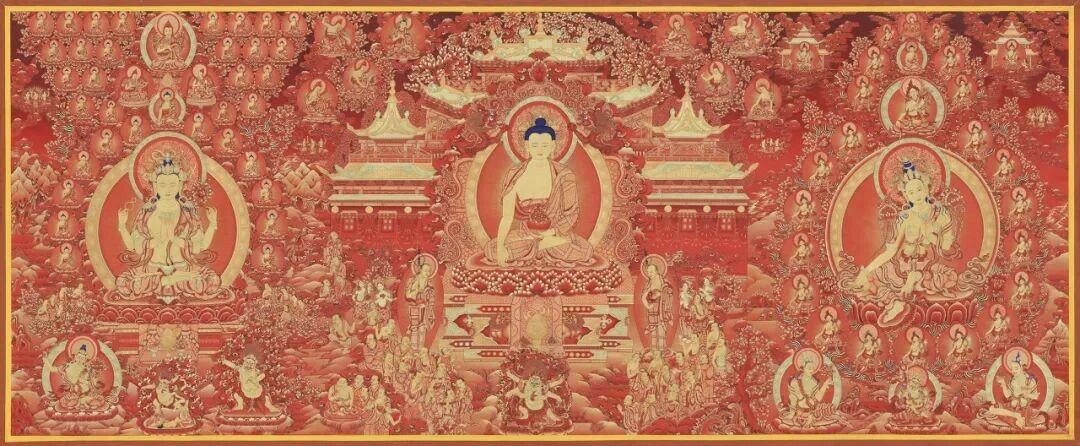
红唐三主尊

290×115cm

棉布矿物质颜料

2012

4.jpg

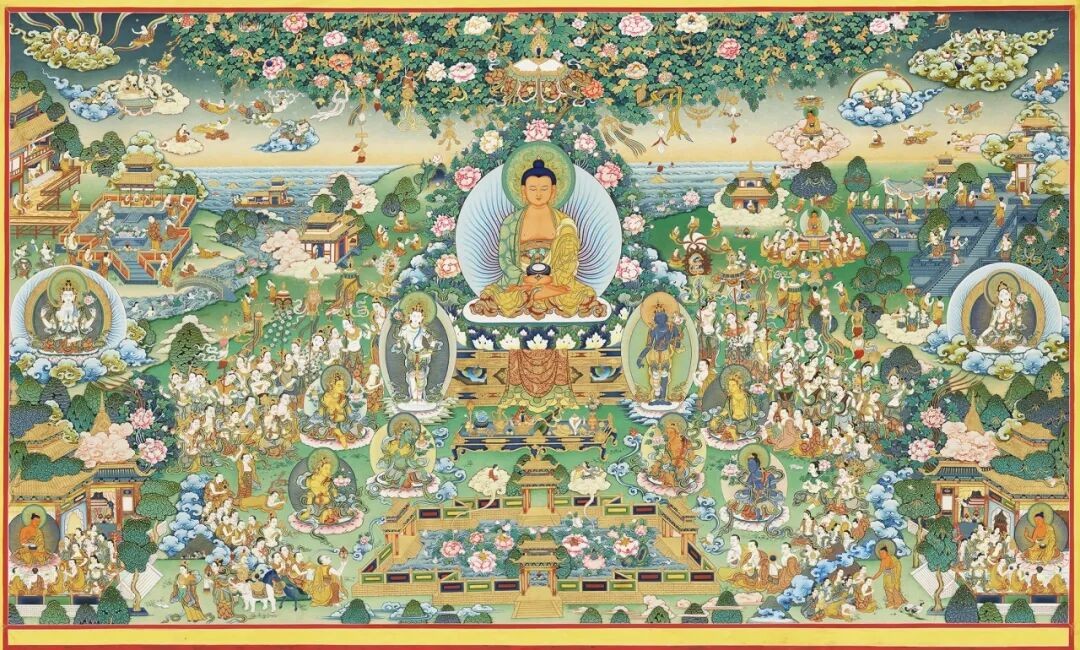
阿弥陀佛极乐世界

215×128cm

棉布矿物质颜料

2013

5.jpg

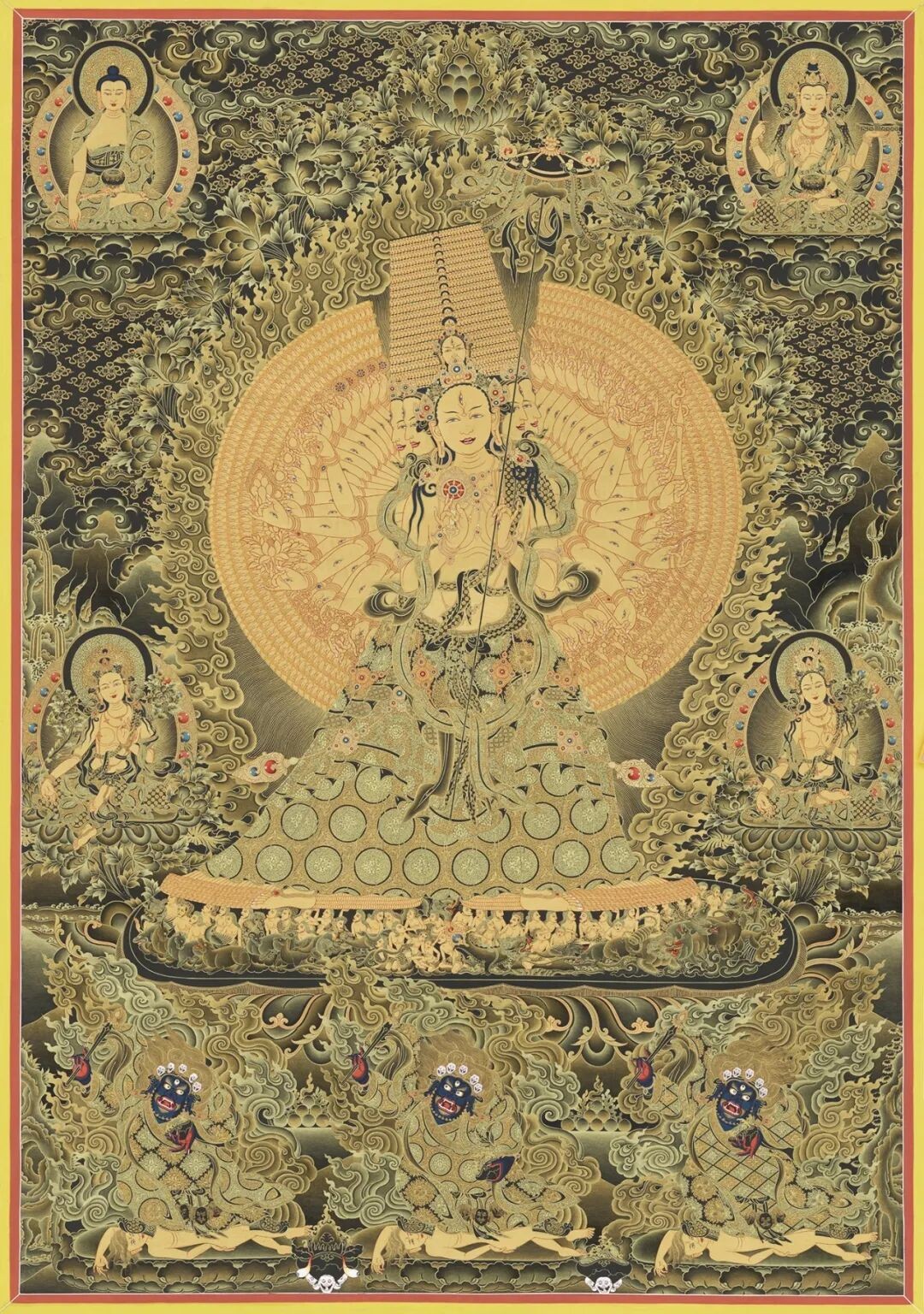
黑唐大白伞盖佛母

83×119.5cm

棉布矿物质颜料

2013

6.jpg

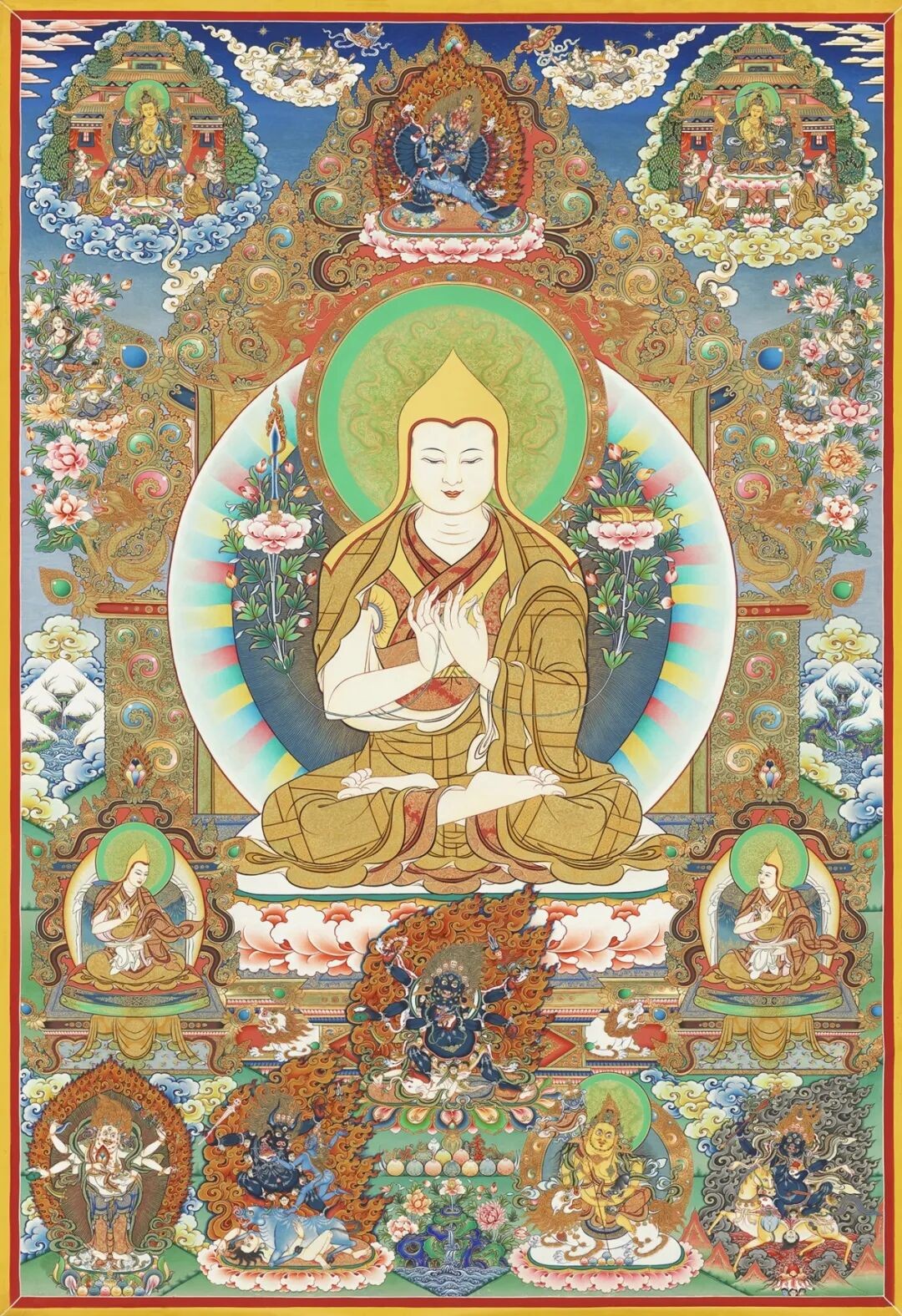
宗喀巴大师

82×121cm

棉布矿物质颜料

2013

7.jpg

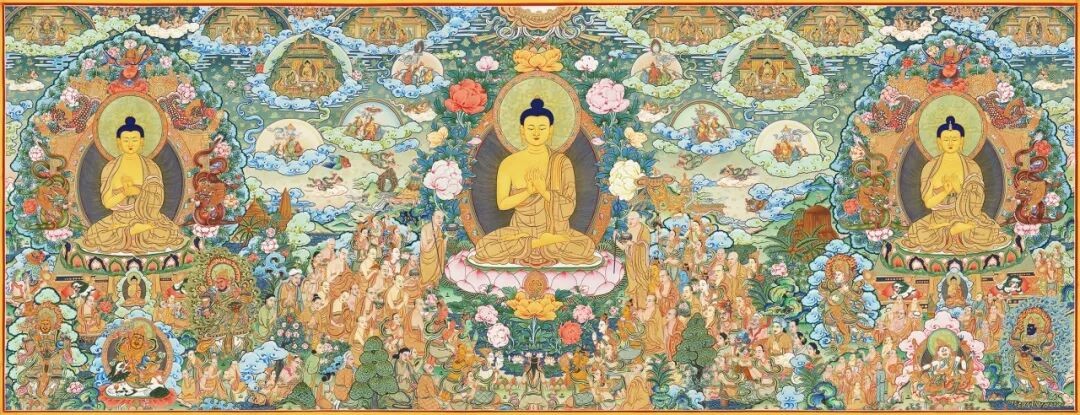
三世佛

316×118.5cm

棉布矿物质颜料

2014

8.jpg

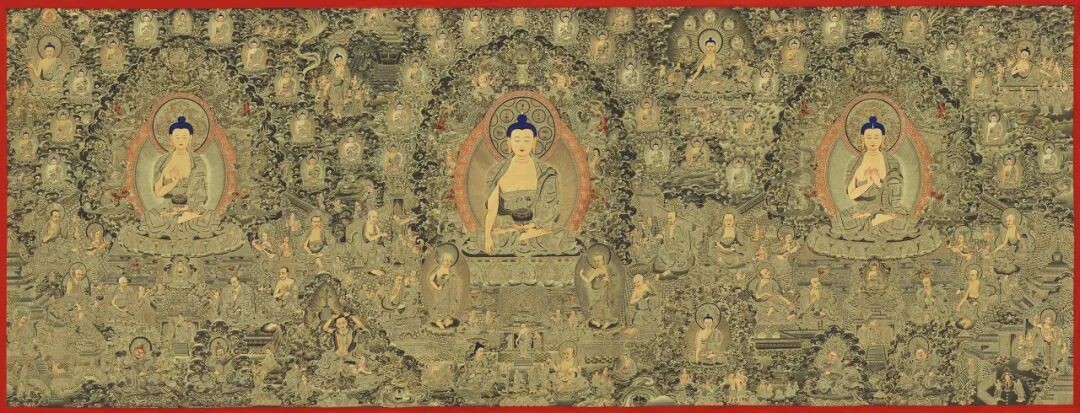
黑唐三世佛

325.5×121.5cm

棉布矿物质颜料

2015

9.jpg

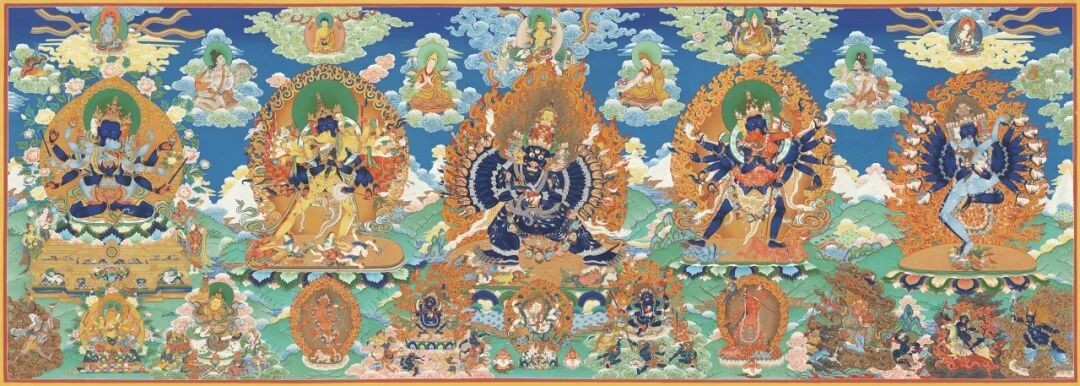
五部金刚

279×96cm

棉布矿物质颜料

2015

10.jpg

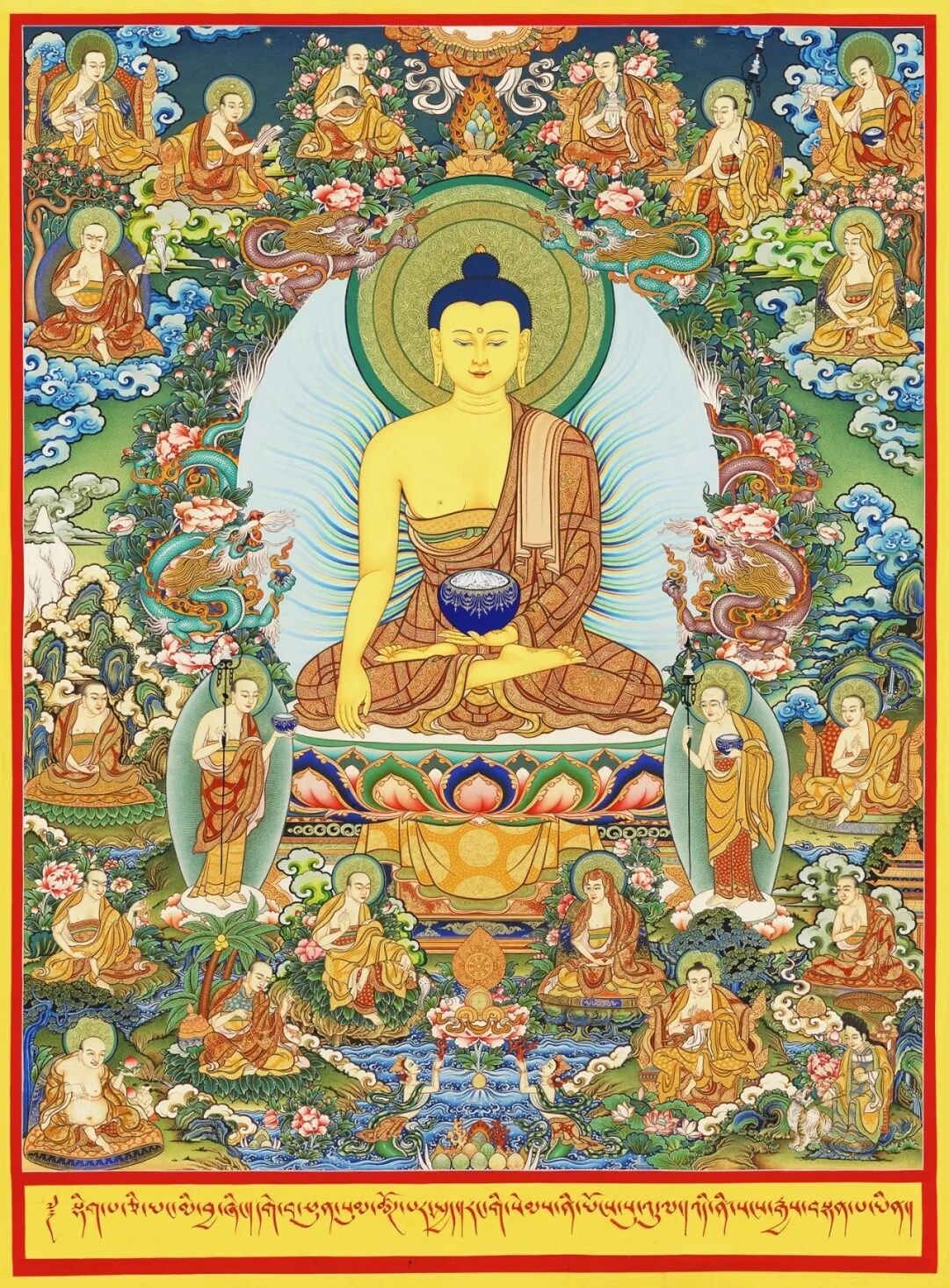
释迦牟尼佛

73.3×100.5cm

棉布矿物质颜料

2015

11.jpg

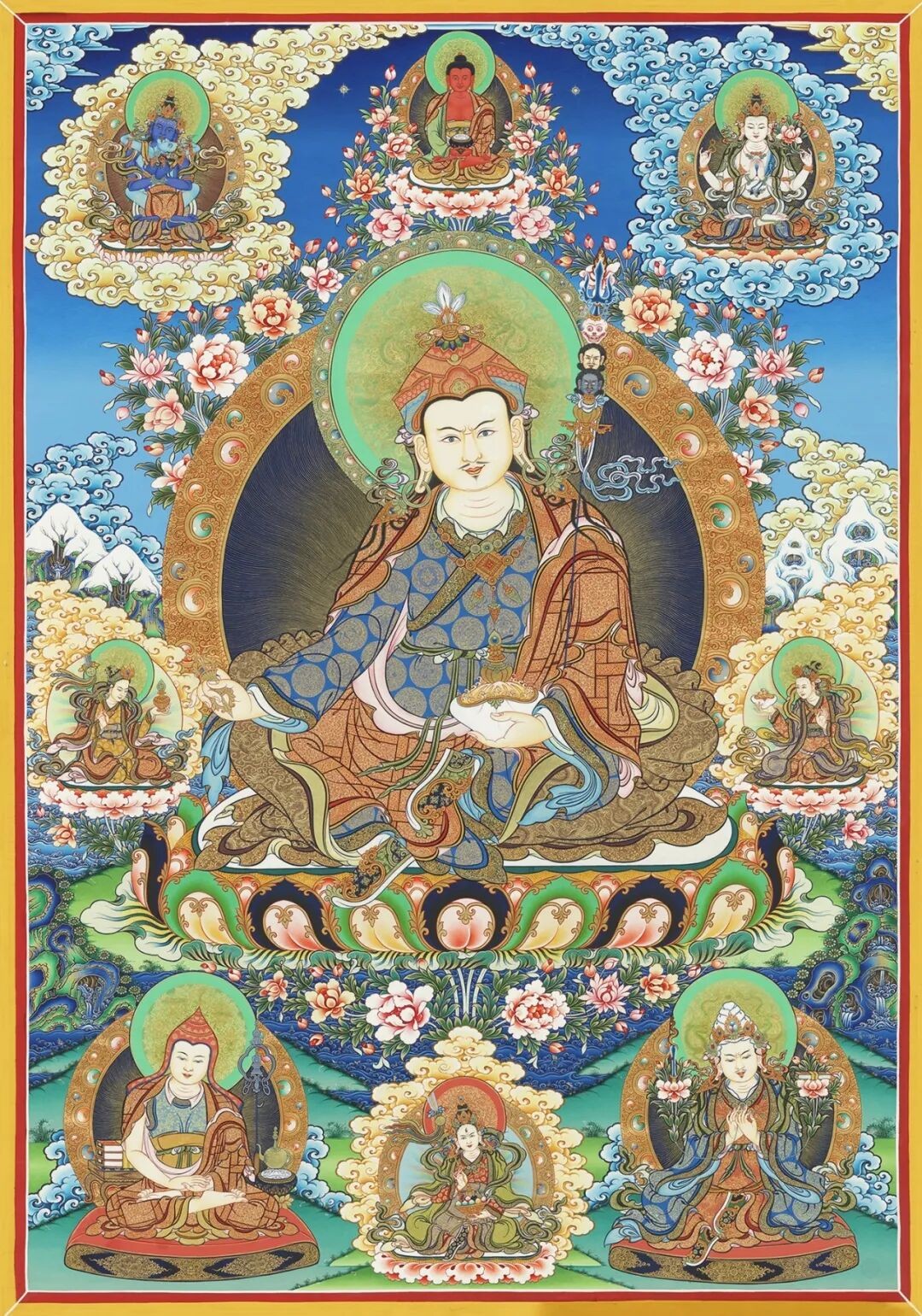
莲花生大师

74×107cm

棉布矿物质颜料

2017

12.jpg

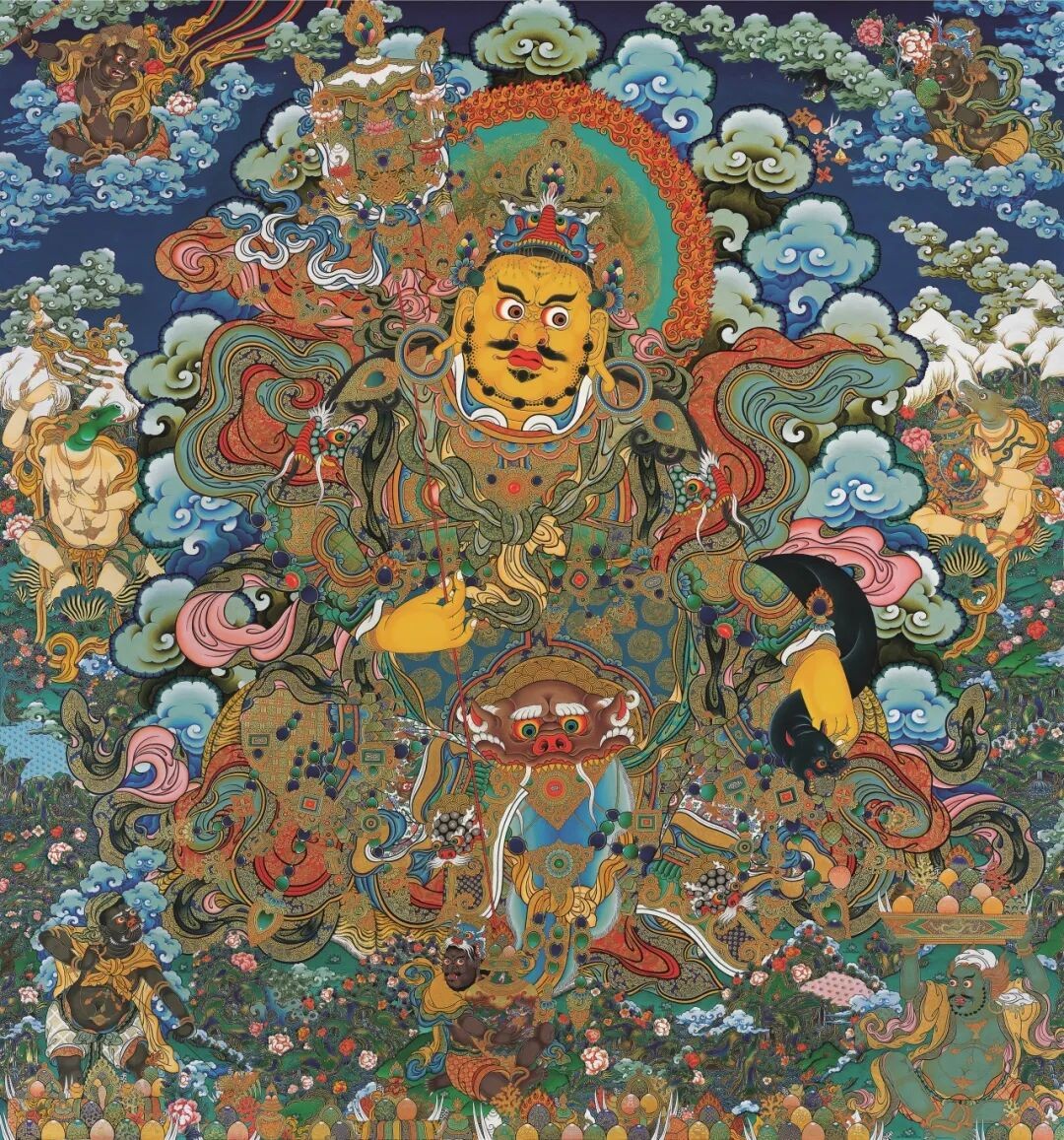
北方多闻天王

215×229cm

棉布矿物质颜料

2017

本文转载自【 深圳美术馆】版权归原平台及作者所有,如有侵权请联系我方删除。